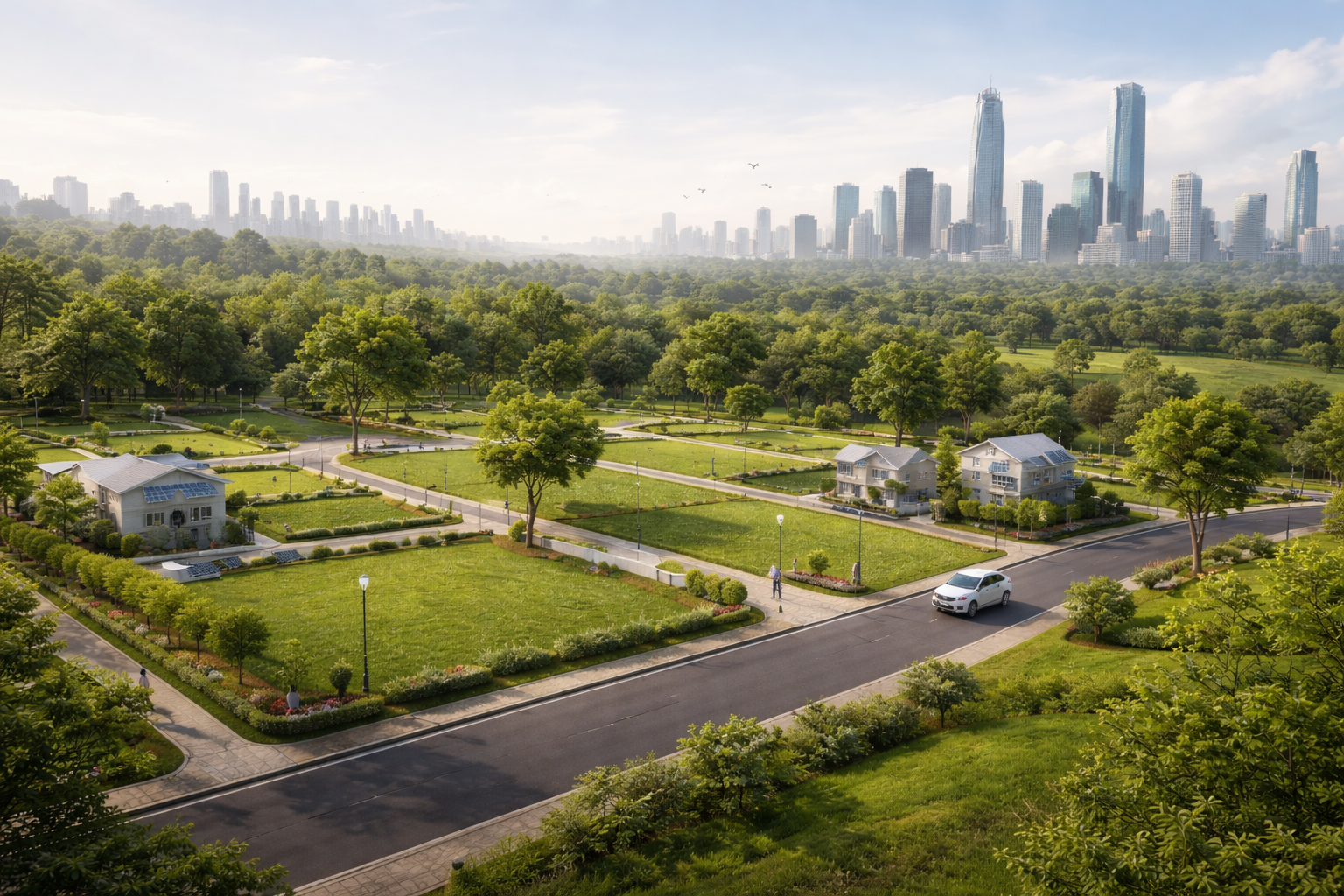
The future of NCR real estate is increasingly being shaped by something that goes far beyond infrastructure and location, the environment. From rising air pollution to climate-related policy shifts and changing buyer preferences, environmental factors are set to influence how and where people invest across the National Capital Region (NCR) in 2026. As developers, investors, and homebuyers become more conscious of sustainability and long-term livability, land investment trends are beginning to shift toward greener, less congested zones.
In this evolving landscape, understanding how environmental concerns impact property demand is crucial for anyone looking to invest in NCR real estate.
Why Environmental Concerns Are Becoming Central to NCR Real Estate
Over the last few years, pollution levels across Delhi and nearby urban pockets have raised concerns among residents and policymakers alike. Seasonal smog, traffic congestion, and declining air quality have pushed buyers to reconsider dense city-center properties. Instead, many are exploring low-density zones and plotted developments with better air quality and open spaces.
In 2026, this trend is expected to strengthen as environmental regulations become stricter and urban planning prioritizes green infrastructure. Buyers are no longer evaluating property only by price per square foot; they are assessing ventilation, greenery, sustainable construction, and access to cleaner surroundings.
For real estate investors, this shift presents a major opportunity to explore emerging areas where ecological balance and affordability intersect.
The Rise of Peripheral Locations and Plotted Developments
One major impact of environmental awareness is the growing interest in peripheral regions around NCR. Areas with lower pollution levels and larger land parcels are gaining traction, especially among buyers seeking long-term appreciation and healthier lifestyles.
Cities like Hapur are seeing increased attention due to their connectivity and relatively cleaner environment compared to central metropolitan zones. Demand for plots in hapur is expected to rise as buyers look for flexibility whether for building custom homes, future investment, or weekend retreats away from dense urban areas.
Plotted developments also align well with modern sustainability goals. They allow better space planning, landscaping, rainwater harvesting, and eco-friendly construction methods that apartment-heavy urban projects often struggle to accommodate.
Price Trends: How the Environment Impacts Property Value
Environmental quality is increasingly influencing pricing patterns across NCR real estate. Areas with better air quality, green belts, and planned infrastructure are commanding premium attention. Conversely, highly polluted or congested localities may experience slower appreciation unless supported by strong redevelopment plans.
For investors, this means environmental data could become as important as market analytics in decision-making. A location that looks affordable today may see strong value growth if it offers cleaner surroundings and planned development.
Additionally, government initiatives focusing on sustainable urban expansion and smart city planning are likely to guide infrastructure spending toward environmentally balanced zones further driving demand in these regions.
How Real Estate Developers Are Adapting
Every forward-thinking real estate developer is now factoring sustainability into project planning. From energy-efficient layouts to green landscaping and low-density designs, developers are positioning projects to meet the evolving expectations of environmentally conscious buyers.
Key trends expected in 2026 include:
- More emphasis on open spaces and community greenery
- Eco-sensitive planning in plotted townships
- Water conservation and solar-ready infrastructure
- Better connectivity to reduce commute-related pollution
This change is not just a branding move; it reflects real demand from buyers who want healthier living environments without compromising investment potential.
Changing Buyer Mindset in 2026
The modern buyer is more informed than ever. People are researching air quality indexes, flood risks, and climate resilience before making a purchase. Millennials and young investors, especially, view land as a flexible asset that can adapt to future lifestyle needs.
This is why plotted developments near NCR are likely to perform strongly in the coming years. Buyers are prioritizing space, adaptability, and environmental comfort factors that often lead them away from crowded urban apartments toward emerging land markets.
The Future of NCR Real Estate Is Greener and Smarter
As environmental challenges continue to reshape urban living, NCR real estate is entering a new phase where sustainability and livability will heavily influence property decisions. Cleaner air, greener surroundings, and thoughtful planning are no longer optional — they are becoming key drivers of demand and price appreciation.
For investors looking to capitalize on this shift, exploring well-planned, plotted developments in emerging locations like Hapur could be a strategic move. Projects that combine connectivity, environmental awareness, and long-term growth potential are expected to define the next wave of real estate success.
If you are planning to invest smartly in 2026, consider exploring projects by Aspire Group Land, a trusted name offering thoughtfully planned land options designed for modern buyers seeking both value and sustainability. Their focus on future-ready developments makes them a strong choice for anyone looking to secure a meaningful stake in the evolving NCR landscape.