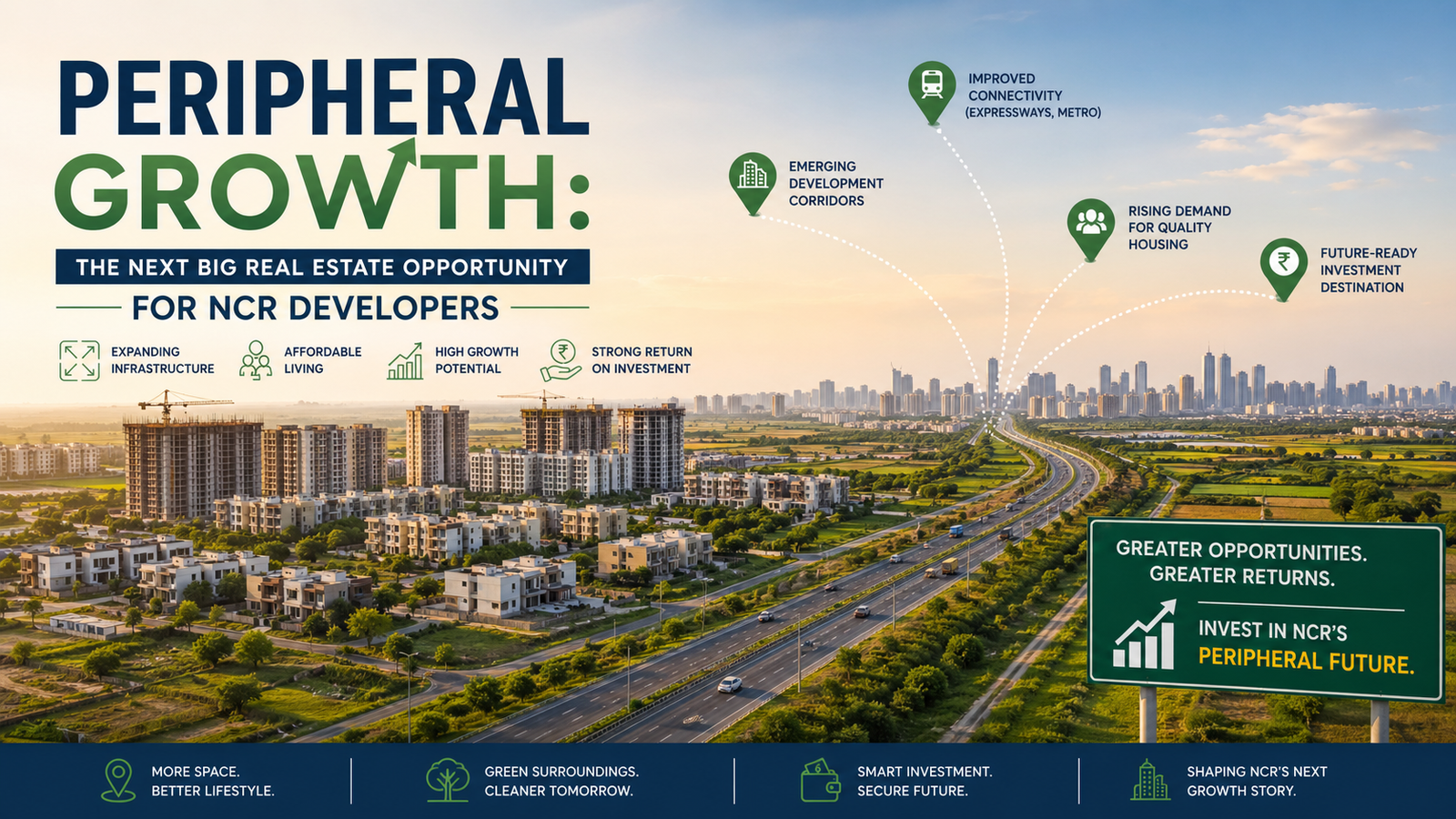
The real estate landscape of the National Capital Region (NCR) is undergoing a significant transformation. While established hubs like Gurgaon, Noida, and Central Delhi have long dominated the market, rising costs, congestion, and limited land availability are pushing the focus outward.
Today, peripheral regions are emerging as the next big real estate opportunity for NCR developers, offering a perfect mix of affordability, scalability, and future growth potential.
The Shift from Core to Peripheral Markets
For years, central NCR locations have been the preferred choice for both homebuyers and investors. However, skyrocketing property prices and saturated land parcels have made it increasingly difficult for many to enter these markets. As a result, attention is gradually shifting toward peripheral areas such as Greater Noida West, Yamuna Expressway, Sohna, and Ghaziabad extensions.
These regions offer larger land parcels at relatively lower costs, enabling NCR developers to design expansive and thoughtfully planned projects. For buyers, this translates into better value for money, larger homes, improved amenities, and a more balanced lifestyle.
Infrastructure Driving Expansion
Infrastructure development is the backbone of peripheral growth. Projects like the Dwarka Expressway, Delhi-Mumbai Expressway, and expanding metro corridors have significantly improved connectivity between core and emerging areas.
This enhanced accessibility has reduced the psychological and practical distance between peripheral zones and major business districts. NCR developers are capitalizing on this by launching projects in locations that were previously considered too far or underdeveloped. With smoother commutes and better road networks, these areas are becoming increasingly viable for daily living.
Rise of Integrated and Self-Sustained Townships
One of the most noticeable trends in peripheral NCR is the rise of integrated townships. Unlike the cramped and often chaotic developments in city centers, these projects are designed to offer a holistic lifestyle.
NCR developers are focusing on creating self-sufficient ecosystems that combine residential units with retail spaces, schools, healthcare facilities, and recreational zones. Open green spaces, walking tracks, clubhouses, and smart infrastructure are no longer luxury additions; they are becoming standard expectations.
This township model not only enhances the quality of life but also increases the long-term appeal and sustainability of these developments.
Changing Buyer Mindset
The modern homebuyer is no longer solely driven by location prestige. Instead, factors like space, environment, and lifestyle quality are taking center stage. The pandemic accelerated this shift, making people more conscious of the importance of open spaces and healthier surroundings.
Peripheral regions naturally align with these evolving preferences. With less congestion and more greenery, they offer a lifestyle that core urban areas often struggle to provide. NCR developers are tapping into this demand by offering spacious homes at competitive prices, making peripheral living both aspirational and practical.
Strong Investment Potential
From an investment standpoint, peripheral NCR holds immense promise. Property prices in these regions are still relatively affordable, providing an opportunity for early investors to enter at a lower cost.
As infrastructure projects near completion and demand continues to rise, these areas are expected to witness steady appreciation. For NCR developers, this translates into higher absorption rates and sustained market interest. Investors, on the other hand, benefit from both capital appreciation and potential rental yields in the long run.
Government Push and Policy Support- NCR Developers
Government initiatives have further accelerated the growth of peripheral areas. Policies promoting affordable housing, improved urban planning, and infrastructure development have created a favorable environment for expansion.
The upcoming Noida International Airport along the Yamuna Expressway is a prime example of how large-scale projects can transform entire regions. Such developments not only boost connectivity but also attract commercial activity, increasing the overall value of surrounding real estate.
Challenges That Need Attention
Despite the promising outlook, peripheral growth is not without challenges. Infrastructure development must keep pace with residential expansion to avoid issues related to connectivity and livability.
Social infrastructure, such as schools, hospitals, and entertainment hubs, needs to be developed simultaneously. NCR developers also face the responsibility of ensuring timely project delivery and maintaining construction quality to build long-term trust among buyers.
Sustainable planning will be crucial to prevent unorganized growth and ensure that these areas evolve into well-structured urban communities.
The Way Forward
Peripheral growth is no longer a secondary trend it is becoming the primary driver of NCR’s real estate future. As core markets reach saturation, the expansion toward peripheral regions presents a logical and strategic opportunity.
For NCR developers, the key lies in forward-thinking development projects that prioritize sustainability, connectivity, and lifestyle. Those who recognize the potential early and invest in building high-quality, future-ready communities will lead the next phase of real estate growth in NCR.
In conclusion, peripheral NCR is redefining the dynamics of real estate in the region. With the right blend of infrastructure, planning, and innovation, it stands as the next big opportunity for NCR developers to shape the future of urban living.